
Spinal rehabilitation in Woodinville: two or three home exercises that help the result stick, instead of standing appointments
The adjustment gets a stiff joint moving. The exercises help it stay that way, done at home instead of in a course of rehab sessions.
5.0 on Google
17+ years in practice
No prepaid plan
No referral needed. In most cases you are treated on the first visit and leave with your exercises.
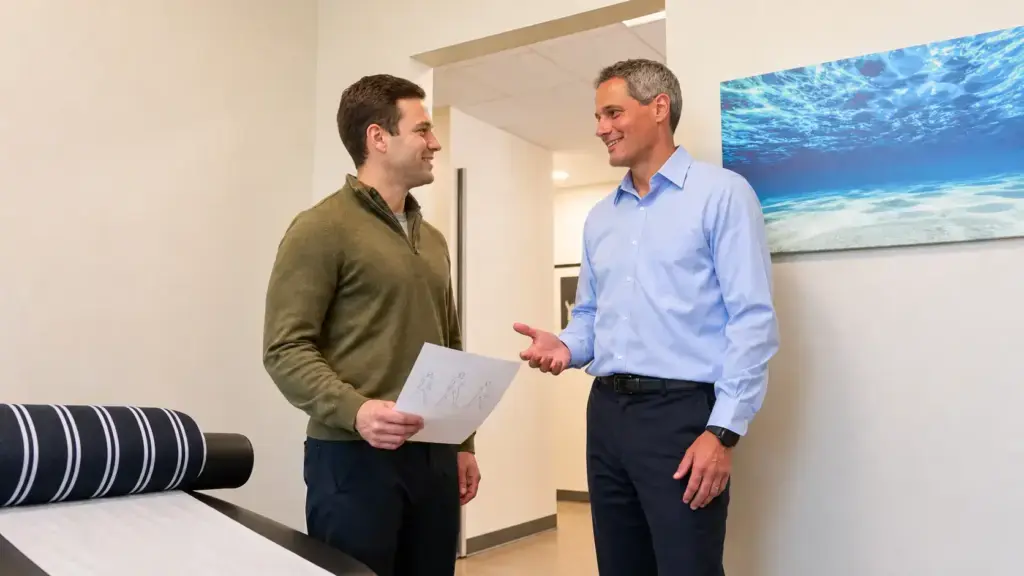
5.0 on Google, and he teaches the exercises, not just the adjustment
Verbatim Google reviews from the Woodinville clinic.
Dr. Penner is an excellent chiropractor. I visited him a few months ago for a lingering pain in my neck. Not only did the pain essentially go away, but he also gave me some tips about posture while working and some neck stretches that would help. Without the help of Dr. Penner, I would still be feeling that little pain in my neck today!
Benjamin Malchert · Woodinville

Highly recommend Dr. Penner. In addition to being knowledgeable, he is intentional in asking questions to understand what’s going on and how he can help. Also appreciated him recommending stretches to help improve mobility at home.
Trevor Morse · Woodinville
Dr Penner is awesome highly recommend. He is an athlete and so understands athlete problems. I have visited him over many years at different locations when I find ways to injure myself in training and have always had great results. He’s great at teaching exercises that help the healing process and getting back to movement and play.
Matt Causey · Woodinville
I’ve seen Dr. Penner off and on for years now and have always been given good information and received the appropriate treatment that involved only a necessary amount of visits–no pressure to come for weeks and weeks if things were improving; which they always did. Dr. Penner has a calm and friendly manner and is a great communicator.
Deborah Ferguson · Woodinville
What does spinal rehabilitation involve?
Spinal rehabilitation at SoundCare Chiropractic in Woodinville is the exercise half of your treatment. Dr. Joshua Penner, DC, picks two or three corrective exercises from what your exam found, teaches them in the visit, and adds one change to how you sit, lift or sleep. You do them at home, briefly, most days. The adjustment gets a stiff joint moving again. The exercises are what help keep it moving.
It is not a printed sheet of generic stretches, and it is not a program that assumes you have forty spare minutes a day. Each movement is there because of something the exam found: a joint that stopped moving, a muscle guarding it, a pattern in how you bend or turn.
The evidence is strongest on the part that matters most here, which is stopping the next episode. A 2016 review of prevention trials in JAMA Internal Medicine found that exercise, especially combined with education, lowered the risk of a new episode of low back pain. Education on its own, back belts and shoe insoles did not. That is the entire argument for bothering.
It also includes the unglamorous part — how you sit, lift, drive, sleep and carry things. Those habits can quietly undo a good result between visits, and fixing one of them is often worth more than another appointment.
This is what you get instead of standing appointments
It is the obvious question about a practice that discharges you: if care ends, what stops the problem coming back? This is the answer. Two or three movements and one habit change are what help the result hold after you stop coming in, which is why they get handed over rather than sold as an ongoing course of visits.
How rehab works here, from the exam to the day you stop coming in
Chosen from your exam
On the first visit Dr. Penner tests how your spine actually moves, including range of motion, and finds which joints have stopped moving and which muscles are guarding them. The exercises come from that, not from a template.
Taught in the room
You learn each movement during the visit, alongside the adjustment and soft-tissue work, so the plan you take home is something you have already done once.
One habit, not ten
Most people get one change to how they sit, lift, drive or sleep. One habit that sticks is worth more than ten you remember for a week.
Yours to keep when care ends
When you are better, Dr. Penner says so, and the exercises go home with you for good. Come back if something comes up. Most people do not need to.

Worth the most when the same pain keeps coming back
That last one is the honest summary. The goal of this part of the work is to make you need us less.
Questions about spinal rehabilitation
Rehabilitation is part of how every condition at the clinic is treated, from back and neck pain to sports injuries. For the full list, see Woodinville chiropractic services.
How is spinal rehabilitation different from an adjustment?
An adjustment restores movement to a joint that has stopped moving. Rehabilitation is what you do between visits so that movement holds: specific exercises for the joint and the muscles around it, plus one habit change. Most people get both in the same visit.
How much time do the exercises take?
Not much. It is usually two or three movements, done briefly, most days. The program is built for a normal day, not for someone with forty spare minutes and a home gym.
Do I have to keep coming in for rehab sessions?
No. The exercises are handed over for you to do at home, not sold as a course of appointments. Care ends when you are better, Dr. Penner tells you when that is, and most people are done in a handful of visits.
Is a chiropractor the same as a physical therapist?
No. They train for different jobs. A chiropractor is trained to diagnose mechanical problems in the spine and joints and treat them hands-on: adjustment to restore movement where a joint has stopped moving, massage and soft-tissue work for the muscles guarding it, and a few exercises to keep it moving. A physical therapist is trained to rebuild strength, balance and function through supervised exercise, often over a series of sessions. At SoundCare in Woodinville, Dr. Joshua Penner, DC, examines you, treats the joint and the muscle in the same visit, and hands you two or three exercises to do at home.
Does insurance cover spinal rehabilitation?
Often, depending on your plan. Most private insurance is accepted, HSA and FSA funds generally cover rehabilitation, and after a car accident the PIP on your auto policy usually applies. Call with your insurer and member ID and we will check your benefits before your first visit.
What happens on the first visit?
You are examined, told what was found in plain language, and in most cases treated the same day. You leave with two or three specific things to do at home, and Dr. Penner’s estimate of how many visits it takes, said out loud after the exam.
Help the result hold, without a six-month plan
Inside Tree of Health in downtown Woodinville, 10 minutes from Bothell and 15 from Redmond. Mondays and Fridays only. Book online in about a minute, or call 425-215-1880.
5.0 on Google · 17+ years in practice · No prepaid plan · No referral needed
Book Monday or FridayCall 425-215-1880